


How a Professional Privacy Audit and Malware
July 25, 2026


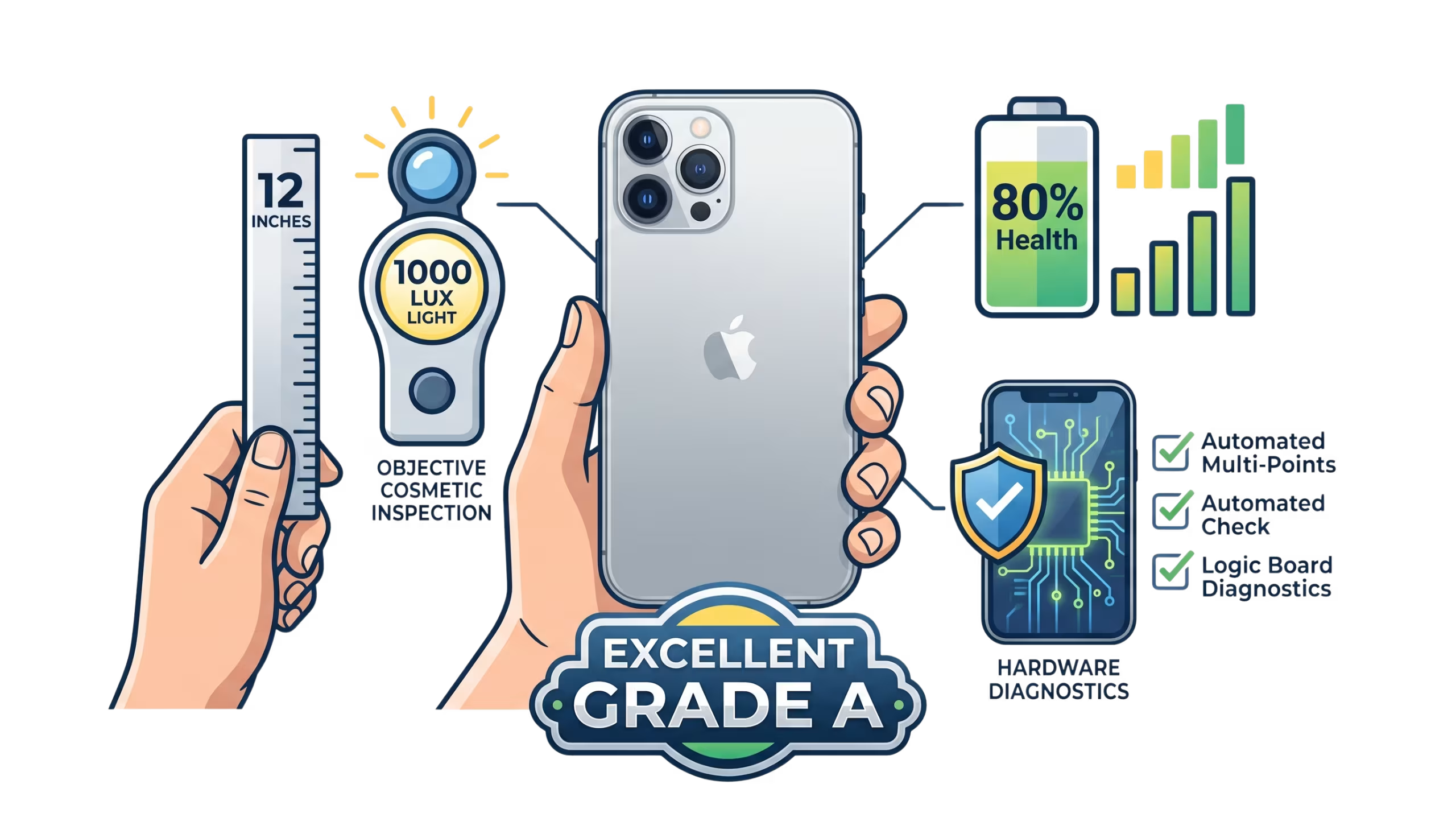
When browsing the pre-owned mobile market, decoding cosmetic grading tiers can feel overwhelming. What does “Excellent Condition” actually guarantee when purchasing a refurbished iPhone? Simply put, this premium tier represents the benchmark for pre-owned luxury, offering an experience that closely mirrors unboxing a brand-new Apple flagship.
An “Excellent” grade ensures the smartphone is fully functional, having cleared rigorous multi-point diagnostic testing that evaluates everything from biometric sensors to screen responsiveness. Cosmically, the handset is near-pristine; any minor imperfections are restricted to microscopic surface blemishes virtually invisible during daily use. Furthermore, these premium devices guarantee robust battery capacity thresholds, preventing unexpected power drops.
For buyers mapping out their options, cross-referencing these benchmarks with a guide on Certified Pre-Owned (CPO) vs. Refurbished: Which Grade is Right for You? provides necessary structural clarity before selecting a specific tier. Ultimately, selecting this top-tier designation allows value-conscious consumers to optimize their tech hardware investment, securing pristine performance without the premium retail price tag.
Navigating the secondary smartphone market requires absolute transparency backed by rigorous technical expertise. Establishing precise benchmarks around physical appearance and internal component functionality is the cornerstone of a secure technology investment. A premium refurbished device must be defined by objective, empirical metrics rather than ambiguous marketing labels.
This comprehensive technical breakdown demystifies professional cosmetic grading scales, differentiating near-mint, flawless enclosures from minor operational wear while revealing the exact engineering thresholds that dictate battery capacity health and peak performance lifecycle retention.
Furthermore, we outline the strict multi-point automated hardware diagnostic protocols required to verify component-level integrity, covering everything from logic board stability to biometric sensor array responsiveness. Aligning strict quality control standards with transparent diagnostic data eliminates consumer purchase anxiety, providing an authoritative, trustworthy framework for evaluating high-value pre-owned hardware.
When industry experts evaluate a pre-owned smartphone, the Grade A designation represents the absolute highest cosmetic benchmark achievable. This near-mint classification guarantees that the device’s aesthetic integrity remains virtually indistinguishable from a brand-new retail unit. Under strict visual inspection protocols, Grade A standards dictate that the chassis, display glass, and camera housing must be completely free from visible dents, deep scratches, or structural scuffs.
Any microscopic surface wear or micro-abrasions must remain entirely imperceptible at a standard viewing distance of twelve inches. By strictly adhering to these authoritative quality control parameters, certified technicians ensure consumers receive a physically flawless product. This transparent grading system builds absolute buyer trust, confirming that your premium tech investment looks exactly as pristine as it performs.
The 12-inch visual rule is the definitive quality control protocol utilized by certified hardware technicians to objectively evaluate cosmetic integrity. During this standardized assessment, the device is held exactly one foot away from the inspector’s eyes under a regulated 1,000-lux luminous environment, which perfectly replicates clear, natural daylight.
If a pre-owned smartphone reveals no discernible blemishes, surface defects, or finish irregularities at this specific distance, it officially qualifies for premium “Excellent” status. This empirical methodology eliminates subjective bias from the refurbishment pipeline, ensuring a uniform baseline of visual luxury that consumers can confidently verify.
To maintain strict Grade A classification, quality assurance specialists perform a rigorous, multi-angle examination of the device’s physical architecture. This diagnostic screening meticulously isolates specific physical vulnerabilities:
Display and Back Glass: Technicians scan the panel surface using angled light refraction to detect shallow micro-abrasions, hairline scratches, or localized pitting that could compromise the integrity of the oleophobic coating or distort panel clarity.
Chassis and Bezel Perimeters: Checking the outer structural corners for impact dings, finish peeling, or minor abrasions on premium aluminum, stainless steel, or titanium bands.
Interface and Port Peripherals: Evaluating the direct perimeter of the USB-C or Lightning charging dock for deep scratches or connector channel wear caused by repetitive cable insertions.
When hunting for the best budget cell phones within the secondary telecom market, understanding the true delta between cosmetic grading tiers prevents costly consumer mistakes. While “Good” or “Fair” tiers offer fully functional motherboards at a lower upfront cost, they frequently exhibit pronounced structural degradation, deep corner dents, or noticeable screen scratches.
Opting for an “Excellent” grade handset ensures you secure superior structural integrity. Because these top-tier devices have experienced negligible physical trauma during their previous lifecycles, their internal micro-soldered components remain completely secure, water-resistance seals are less likely to be compromised, and the physical housing retains a significantly higher resale value.
This smart selection method highlights how Unlocking Savings: How Buying a Pre-Owned Flagship Beats a New Mid-Range Phone balances long-term performance value with strict financial limits. Spending a minor premium for an Excellent-grade device yields the maximum performance lifespan, delivering the absolute highest true return on investment for shoppers tracking down the best budget cell phones.
In the electronics refurbishment industry, a lithium-ion battery’s maximum capacity percentage serves as the primary predictor of a device’s operational stability. The 80% capacity metric is not an arbitrary benchmark; it represents the precise threshold where electrochemical degradation begins to severely restrict power delivery. When a cell drops below this critical performance floor, its internal impedance increases, making it unable to sustain the high voltage spikes required by powerful multi-core processors under peak workloads.
Consequently, the mobile operating system’s battery management system activates aggressive performance throttling to prevent sudden, unexpected shutdowns. By enforcing a strict minimum 80% battery health standard, certified hardware technicians ensure the smartphone retains its native computational speed, stable voltage regulation, and genuine all-day endurance, safeguarding your tech investment.
The 80% maximum capacity metric is the definitive standard established by hardware engineers and battery manufacturers worldwide. When a smartphone’s battery health falls below this non-negotiable benchmark, the cell’s internal chemistry can no longer guarantee the stable, high-voltage power delivery required during intensive operations.
This specific threshold represents the tipping point where a battery shifts from an optimal state of health to a degraded state. Maintaining a strict 80% minimum floor ensures that pre-owned devices deliver reliable runtime and operate at their intended factory speeds, offering consumers an enterprise-grade assurance of device longevity.
Lithium-ion cells degrade naturally over time through a combination of thermal stress, calendar aging, and structural changes during active usage. Understanding this chemical breakdown requires analyzing how a battery handles repeated energy transfers:
The Nature of Charge Cycles: A complete charge cycle is defined as utilizing an amount of power equal to 100% of the battery’s capacity, which can be accumulated across multiple days. Standard smartphone batteries are engineered to retain roughly 80% of their original capacity after approximately 500 to 800 full cycles.
Impedance and Chemical Resistance: As cycles accumulate, internal structural degradation occurs within the cathode and anode materials. This leads to a substantial increase in internal impedance (electrical resistance), making it significantly harder for ions to move smoothly between electrodes.
Capacity Loss: Over time, active lithium ions become permanently trapped due to secondary chemical reactions. This irreversible loss diminishes the total runtime the phone can sustain on a single charge, accelerating the drain rate.
When internal resistance spikes in a degraded battery, the cell struggles to meet the rapid, transient power demands of modern mobile chipsets. To prevent total hardware failure or component damage, advanced operating systems execute automated safety protocols:
True device quality cannot be verified by cosmetic appearance alone; it requires a meticulous exploration of internal circuit architecture. Deep-level hardware diagnostics utilize advanced automated software and specialized testing tools to programmatically verify every micro-component hidden within the smartphone’s chassis. Experienced hardware engineers execute rigorous validation protocols that look far beyond the glass display, testing for microscopic logic board fractures, erratic voltage current loops, and subtle component-level failures.
These comprehensive 60-point diagnostics scrutinize everything from biometric sensor arrays and cellular radio basebands to the integrity of the integrated charging IC chip. By running exhaustive automated diagnostic sequences, certified technicians isolate hidden hardware flaws before they manifest as operational failures. This empirical approach guarantees a reliable pre-owned device that strictly complies with professional performance standards and enterprise-grade quality control.
To eliminate human error and subjective assessment, modern electronics refurbishment facilities deploy enterprise-grade automated multi-point inspection frameworks. These advanced software solutions programmatically communicate directly with the smartphone’s logic board to run over 60 simultaneous functional tests in a matter of minutes.
By utilizing cloud-based diagnostic algorithms and specialized testing hardware, certified technicians can instantly verify internal component integrity with objective data. This automated workflow ensures every pre-owned smartphone meets strict manufacturer tolerances and performs identically to a brand-new retail unit before it ever reaches the consumer.
A comprehensive automated diagnostic scan rigorously evaluates the most expensive and operationally critical hardware modules within the device:
Biometric Sensor Calibration: The software tests the infrared dot projectors utilized in Face ID and the ultrasonic mapping of Touch ID to guarantee instantaneous, secure biometric authentication without failure.
OLED Display and Digitizer Integrity: Automated display diagnostics scan the panel for dead pixels, OLED burn-in, and digitizer touch dead-zones. It also verifies that advanced features like True Tone color balancing and 120Hz high-refresh-rate rendering are functioning flawlessly.
Carrier Network Alignment: The framework stress-tests the internal cellular radio antennas, confirming multi-band sub-6GHz 5G and LTE connectivity. This guarantees the device maintains a robust, uninterrupted signal across all major domestic and international wireless carriers.
Beyond physical hardware validation, establishing a secure chain of ownership is the most critical step in the professional refurbishment supply chain.
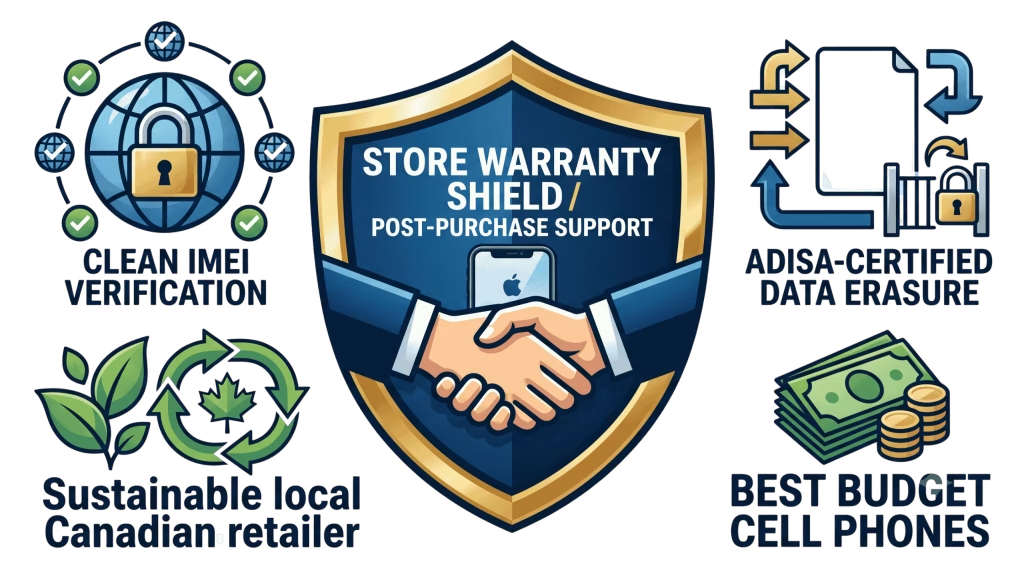
A dedicated retail warranty from an authorized merchant serves as the ultimate consumer protection framework in the secondary electronics market. While peer-to-peer classifieds offer zero recourse after a transaction, a structured store warranty provides crucial risk mitigation against delayed hardware anomalies.
Industry-leading vendors back their hardware with rigorous post-purchase protection windows, covering unexpected component-level failures such as motherboard defects, charging IC degradation, or touch-digitizer glitches. For a comprehensive overview of consumer rights across provinces, reviewing Understanding Refurbished Phone Warranties in Canada: What’s Covered? ensures complete baseline clarity. Relying on a documented store warranty transforms a pre-owned smartphone purchase into a secure, risk-free technical investment.
When hunting for the best budget cell phones, local peer-to-peer classifieds and social media marketplaces can initially look like a goldmine. However, buying a smartphone from an unverified stranger in a parking lot or coffee shop introduces massive financial vulnerabilities. The most severe threat to your wallet is the Canadian National Stolen Device Blacklist, a database managed by the Canadian Telecommunications Association (CWTA).
A common marketplace scam involves a seller handing over a perfectly functioning device during a cash transaction, only to report the phone as lost or stolen to their wireless carrier hours later to claim insurance. Once that device’s International Mobile Equipment Identity (IMEI) number hits the national blacklist (Device Check Canada), the phone is permanently blocked from accessing major networks like Rogers, Telus, Bell, and Freedom Mobile. Because peer-to-peer sales offer no buyer protection, you are instantly left with an expensive, unusable paperweight and zero financial recourse.
To secure a reliable, budget-friendly device, you must eliminate the guesswork of private sales. Certified retailers run pre-owned mobile phones through enterprise-level diagnostic software such as Phonecheck or Apkudo which completely outperforms a casual visual check during a quick meetup.
A professional structural and diagnostic inspection guarantees:
Clean IMEI Verification: A deep cross-reference with global databases ensures the device is not blacklisted, carrier-locked, or tied to a previous owner’s iCloud Activation Lock.
Internal Hardware Integrity: Automated software individually tests the multi-touch digitizer, ambient light sensors, biometric infrared cameras, and sub-6GHz 5G antennas for hidden faults.
Liquid Damage Prevention: Technicians inspect internal Liquid Contact Indicators (LCIs) to confirm the logic board hasn’t suffered undisclosed water damage that could cause sudden motherboard failure weeks later.
Battery Cycle Auditing: Precise testing verifies that the lithium-ion battery health exceeds the critical 80% maximum capacity threshold to prevent unexpected processor throttling.
Unlike a private seller who can simply block your phone number if the screen glitches the next day, established retailers provide a true store warranty shield. This immediate post-purchase support is the ultimate consumer protection, guaranteeing that your tech investment performs flawlessly over its intended lifespan.
Bypassing the volatile secondary device market in favor of a certified local Canadian retailer completely de-risks your smartphone upgrade. When you purchase from an established storefront, you gain absolute transparency regarding the device’s cosmetic grading, hardware reliability, and unlock status. You secure premium engineering without paying inflated flagship retail prices or worrying about hidden defects.
Furthermore, trusting a verified retailer actively supports a sustainable circular economy. By adopting a refurbished smartphone, you are directly preventing functional technology from entering local e-waste streams and reducing the massive carbon footprint associated with manufacturing new plastic budget devices.
Whether you are upgrading your daily driver or looking for the best budget cell phones for a family member, sourcing your tech from a certified, warranty-backed local business ensures you perfectly protect both your personal finances and the environment.
Navigating the pre-owned tech market does not have to feel like a gamble. When you understand exactly what “Excellent Condition” entails, flawless cosmetic grading, a strict 80% minimum battery health threshold, and deep-level hardware diagnostics you take complete control of your tech investments. You no longer have to settle for cheap, underpowered plastic devices just to stay within your budget.
By demanding rigorous testing and true post-purchase warranties, you can safely unlock the immense value of the refurbished flagship market. You gain access to aerospace-grade materials, lightning-fast processors, and pro-level cameras without experiencing the brutal retail depreciation of buying brand new.
Ultimately, finding the best budget cell phones is about shopping smarter, not cheaper. If you are in the Edmonton area and want to experience this standard of quality firsthand, visit our team at CellShoppe. Our Certified Pre-Owned iPhones inventory is meticulously vetted, fully unlocked, and backed by a robust store warranty, ensuring your next smartphone upgrade is secure, sustainable, and built to last.
Quick Questions!
The difference comes down to strict cosmetic grading. An “Excellent” (Grade A) refurbished iPhone is in near-mint condition; under the industry-standard 12-inch visual test, you should not be able to spot any scratches on the screen or housing. For example, when reviewing an iPhone 15 vs iPhone 15 Pro, an Excellent grade means the titanium or aluminum chassis will be virtually flawless. A “Very Good” (Grade B) device will have minor, visible wear such as light micro-scratches or tiny scuffs on the bezel but it will function identically to an Excellent model.
Not necessarily, but it is guaranteed to meet a strict operational threshold. Whether you are researching aniPhone 13 Pro Max vs iPhone 14 Pro Max, an Excellent grade ensures the lithium-ion battery has a Maximum Capacity of 80% or higher. While some refurbished phones do receive brand-new replacement batteries if they fail this test, a device with an original battery at 88% health easily qualifies as Excellent and will easily provide reliable all-day power.
Lithium-ion batteries naturally degrade over time through charge cycles. Apple engineered the iOS ecosystem to operate at peak performance as long as the battery retains at least 80% of its original capacity. Dropping below this threshold can cause the processor to “throttle” (slow down) to prevent sudden shutdowns. Therefore, an 80%+ guarantee ensures your phone delivers maximum processing speeds and fluid multitasking.
You should treat all refurbished smartphones as if they are no longer water-resistant. Even if a device looks flawless, the refurbishment and diagnostic process often requires opening the phone to verify internal components or replace the battery. This breaks the factory IP68 waterproof seal. While some refurbishers apply liquid-resistant adhesives, you should never submerge a pre-owned device in water.
A blacklisted phone has been reported lost or stolen to the Canadian Telecommunications Association (CWTA) and is permanently blocked from domestic carrier networks. To avoid this, never buy from unverified sellers. Professional retailers run the device’s unique IMEI number through global security databases (like Device Check Canada) before sale, guaranteeing the device is clean, fully paid off, and ready for activation.
Usually, yes. Most Excellent grade iPhones have never needed repairs. However, if a component like the screen or battery was previously damaged, certified refurbishers will replace it. Depending on the refurbisher’s certifications, they will use either Genuine Apple parts or highly vetted, premium Original Equipment Manufacturer (OEM) equivalent parts to restore the device to factory functionality.
If you see an “Unknown Part” or “Important Display/Battery Message” in your settings (iOS 15.2 and newer), do not panic. Apple uses digital serialization for its components. If a high-quality replacement part is installed outside of Apple’s proprietary repair network, the iOS system flags it because it lacks Apple’s unique digital signature. This notification is strictly informative; it does not degrade your device’s safety, camera quality, or processing performance.
Absolutely. A premium refurbished device must pass strict biometric and display testing. If the True Tone ambient light sensors or the Face ID infrared cameras fail to calibrate correctly, the device automatically fails the enterprise diagnostic inspection and cannot be sold as an Excellent condition handset.
As outlined in any comprehensive Refurbished iPhone Excellent Condition Guide, certified retailers never rely on guesswork. They utilize enterprise-level automated platforms like Phonecheck or Apkudo. These systems run 60-to-80-point algorithmic scans that individually test the multi-touch digitizer, microphone frequencies, accelerometer, and motherboard logic to eliminate human error entirely.
Yes. When purchasing from a trusted Canadian storefront, Excellent pre-owned iPhones are sold fully factory unlocked. This means their cellular antennas are wiped of any restrictive carrier contracts, allowing seamless SIM or eSIM activation on major networks like Rogers, Bell, Telus, and flanker brands like Freedom Mobile.
It is highly risky. Buying from local peer-to-peer classifieds leaves you vulnerable to hidden internal liquid corrosion, sudden IMEI blacklisting, and iCloud Activation Locks. Without a diagnostic report or a store warranty, you have zero financial recourse if the device fails the day after you buy it.
Because Apple’s hardware is exceptionally robust, a premium pre-owned iPhone can easily last an additional 3 to 5 years depending on the model you select. When evaluating how long a device will remain relevant, checking a guide on iPhone 16 Pro Max vs iPhone 15 Pro Max shows that buying a slightly older Pro-tier generation still provides years of top-tier processing power and camera utility.
Yes, and this is the ultimate shield for consumers. Established retailers back their Excellent condition stock with robust post-purchase warranties (typically ranging from 90 days to a full year). This protects your investment against any unforeseen internal hardware defects that might arise after unboxing.
Yes, as long as the device falls within Apple’s software lifecycle support window, which typically lasts 5 to 6 years from the model’s original release date. For instance, if you are debating an iPhone 14 Pro vs iPhone 14 Pro Max, both share the same A16 Bionic chipset and will receive identical, long-term iOS software and security updates for years to come.
It is incredibly easy to verify the battery status on your own. Simply unlock the iPhone, open the Settings app, scroll down to Battery, and tap on Battery Health & Charging. Look at the Maximum Capacity percentage if you purchased an Excellent grade device, this number should read 80% or higher.

Director IT and Marketing
Based in Edmonton, Alberta, Dr. MD Samiul Islam is an Information Systems Consultant, Generative AI Specialist, and Machine Learning Engineer. Holding a Ph.D. in Computing Science from the University of Alberta, he specializes in model interpretability, responsible AI frameworks, and scalable MLOps architectures across Azure, AWS, and GCP. Dr. Islam designs production-grade AI pipelines and predictive analytics solutions using PyTorch, TensorFlow, and LangChain. His domain experience spans high-impact enterprise applications, including satellite crop mapping, hydrological flood modeling, and epidemiological data analytics.
July 25, 2026
July 24, 2026
July 23, 2026
July 22, 2026
July 9, 2026
July 9, 2026
Address: 15803 87 Ave NW, Edmonton, AB T5R 4G7, Canada
Phone: +1 587-444-5888
Support


To Grab The Offer, Fill The Form and Submit Now!